Quick Take: Long Distance Is the Rural Norm. In rural America, your closest match might live two counties over - and that's normal. Here's the short version:
- 50-100 miles is the baseline. Country singles routinely expand search radii far beyond what city daters consider "local."
- Midpoint meetings work. A diner halfway between two farms beats a four-hour one-way drive every time.
- Winter is for visits, summer is for phone calls. Plan in-person time around the slow agricultural season.
- Talk about "where we'll live" early. The land question decides the relationship - better to surface it in month two than year two.
If you've ever explained to a city friend that your boyfriend lives "just down the road" - and watched their face fall when you mentioned the road is 137 miles long - you already understand the rules of dating in rural areas. Country singles don't have the luxury of swiping on a neighbor three blocks away. The MuchDating community runs on a different math, where a serious match worth driving for beats a convenient match worth nothing at all.
This guide walks through why rural daters drive so far, how to plan midpoint meetings that actually work, and what real couples do to keep the spark alive between visits. If you've already read our companion piece on how to date a farmer, this one picks up where that left off - for the partners separated by miles instead of just by harvest.
Why Rural Daters Drive 50, 100, Even 200 Miles
Long-distance dating is the rural norm because the local pool is genuinely too small. Farming-dependent counties in the Midwest and Great Plains have lost roughly 40% of their 20-to-29-year-olds every decade since the 1950s, according to USDA Economic Research Service data. When that much youth migrates out for school or city jobs, the people left back home have usually known each other since kindergarten. Dating someone you sat next to in 4th-grade math class is a tall ask - and dating someone whose family already feuds with yours is a non-starter.
Then there's the privacy problem. Small-town gossip moves faster than a combine in dry corn. One coffee at the local diner with a new face and the whole county knows by Wednesday. For a lot of country singles - especially divorcees, widowers, and anyone burned by a public local breakup - driving two counties over isn't inconvenient. It's the whole point.
I'd rather drive three hours to meet someone new than walk three blocks and run into my ex's cousin at the gas station. - Chris Dowling, 30, Alva, Oklahoma (drove 170 miles to meet his now-wife)
Here's the thing: the average American farmer is about 58 years old, which means the pool of younger, single farmers in any one zip code is small to begin with. Stack that on top of values-alignment - faith, family goals, willingness to live on a working farm - and the realistic search radius for a serious match almost always pushes past 50 miles. Rural relationship researchers and platforms like FarmersOnly recommend 50 to 100 miles as a baseline, with 150 to 200 not unusual when compatibility is right.
What pushes the radius even further
- Faith specificity. A practicing Jewish farmer or a devout Muslim rancher may have to cross state lines to find a values match - see our niche communities.
- Niche operations. Equestrian, dairy, organic, and ranching lifestyles each thin the pool even within ag.
- Second-chance daters. Widowers and divorcees often deliberately date far from their hometown to start fresh.
- Minority country singles. Black, Asian, and Jewish farmers in heavily European-American small towns often expand searches statewide.
Midpoint Meeting: The Rural Dater's Strategy
The midpoint meeting is the single most useful tool in long-distance rural dating. Instead of one person eating four hours of driving alone, you each take half - and meet at a small-town diner, county park, or coffee shop roughly equidistant. Modern platforms like MuchDating now include Midpoint Meeting tools that calculate the equidistant town between two profiles and suggest first-date venues that won't disappoint either of you.
Here's a simple four-step flow that works for most country couples planning a first or early in-person date:
Pick the halfway town
Map the route between your two zip codes and find a town within 15 miles of the midpoint with a real diner or main street.
Choose a public, low-pressure venue
A diner, coffee shop, or county park beats a fancy restaurant. Quick exits if needed and easy conversation if not.
Schedule for the slow season
Aim for winter months or the lull between planting and harvest. Avoid October at all costs unless you both farm.
Share plans with a friend
Tell someone where you're going, when you'll check in, and the other person's name. Country safe is still safe.
Bonus tools that help: HD video calling for "virtual dates" before the first drive, and Travel Mode for browsing matches in cities you'll be in for crop deliveries, livestock auctions, or family visits. Both shrink the distance without adding miles to the truck.
Real Couples Who Made the Distance Work
Long-distance rural relationships succeed all the time - you just don't hear about them on city dating podcasts. Here are two stories from the broader country dating community that show what's possible when both people are willing to put miles on the truck for the right person.
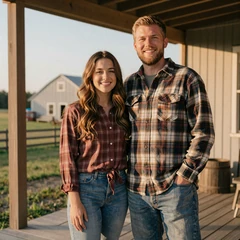
Our first date was a five-and-a-half-hour drive - one way. We met at a little diner halfway, ate pie for two hours, and I knew before the check came. Three years later we're married with a baby on the way.
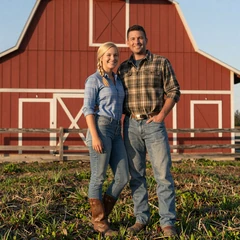
I was stationed in Hawaii with the Army and Emily was back home on her family farm. We talked every day for almost a year before I came home on leave. The first hug at baggage claim was worth every dropped video call.
Chris Dowling's story is another good example. At 30, Chris was living on his family's farm in Alva, Oklahoma, and matched with Kendall while visiting friends 170 miles away in Oklahoma City. He drove three hours each way to see her - repeatedly - and never once thought of it as a problem. They've since married, currently live in suburban Oklahoma City, and plan to move back to the family farmland in Alva to raise children. More stories like these are collected on our success stories page, including faith-based couples, second-chance widowers, and city-to-country transplants.
Staying Connected Through Harvest and Calving
Distance is manageable. Distance plus harvest season is what kills long-distance country relationships. The agricultural calendar imposes predictable blackout windows - planting in spring, harvest from July through October, and calving runs at any time depending on the herd - and during those stretches, even local couples barely see each other. For long-distance couples, the strain compounds fast unless you've planned ahead.
Communication habits that survive busy seasons
- Agree on a check-in cadence. One short call at lunch and a goodnight text is plenty during October. Don't expect long evening conversations.
- Front-load visits in winter. December through February is the rural couple's honeymoon season. Use it.
- Voice notes over texts. A 30-second audio message can be played one-handed in the tractor cab - no thumbs required.
- Don't text-fight across miles. Save hard conversations for the next in-person visit. Tone disappears in text and reappears as resentment.
- Plan one big slow-season trip. A long weekend together in January often saves the whole year.
If you're new to the rhythm of farming busy periods, our guide to seasonal dating challenges walks through every month so you know exactly when to expect silence and when to expect attention.
We had one rule: no fighting by text. If something was bothering either of us, we wrote it down and brought it up at the next visit. Saved us a hundred bad nights. - Long-distance MuchDating couple, married 2024
The "where will we live" conversation
This is the conversation rural long-distance couples avoid for too long, and it's the one that decides the relationship. If one of you runs a working farm and the other rents an apartment in a college town, the land almost always wins - farms can't be picked up and moved. Talk about it openly within the first few months: who relocates, what the timeline looks like, and what compromises each of you can live with. Better a clear answer in month three than a heartbreak in year two.