Quick Take: Farm Life Is a Partnership. Country couples build something most city relationships never get to feel - a shared everyday that's part marriage, part business, part legacy:
- The day starts before the sun. Coffee, chores, and quiet conversation are the real love language.
- Work ethic beats romance. Couples who pull the same plow stay together longer than couples who plan the perfect date.
- Kids grow up in the work. Farm-raised children learn responsibility, animal care, and family teamwork by age six.
- You're building for grandkids. Farm relationships think in 50-year arcs, not five.
Ask any country couple what makes their relationship work and they'll rarely mention dinner reservations. They'll mention the morning their partner woke up at 2 a.m. to help pull a calf. The afternoon they fixed the fence together in the pouring rain and laughed instead of fighting. The Tuesday they sat on the tailgate and split a sandwich while watching the corn grow. Life on a farm and relationships are tied so tight they can't really be separated - and that's the secret most folks who join MuchDating are quietly hoping to find.
If you're curious about what farm love actually feels like - not the Hallmark version, but the real deal - pull up a chair. This is a warm, honest look at the rhythm country couples live by, the partnership dynamics that hold them together, and the multigenerational story they're writing together.
A Day in the Life on a Working Farm
The day begins in the dark. Around 4:45 the coffee pot clicks on, two pairs of boots come out from under the bench by the back door, and the conversation starts in low voices because the kids are still asleep. By 5:15 a country couple is already outside, splitting chores by habit - one heads to the barn, the other checks on the hens or fires up the tractor. The first hour is the quietest, most intimate part of the day, and most farm partners agree it's the most underrated form of romance there is.
By 7 a.m. there's been a feed run, a fence walk, and a stop by the calving pasture. Breakfast is real - eggs, bacon, biscuits, gravy if it's a Sunday - and it's eaten standing up half the time. The morning bleeds into a list of jobs that's never finished: mending, hauling, planting or harvesting depending on the season, vet calls, tractor repairs, and the eternal background hum of weather watching.
Romance on a farm isn't a candlelit dinner. It's him handing you a thermos at 5 a.m. without a word, because he knows you didn't sleep. It's her finishing the chores so you can sit down ten minutes early. - Hannah and Caleb, Iowa farm couple, married 11 years
Lunch is the first real pause - usually a half hour at the kitchen table or out at the field if the work is far from the house. Then the afternoon stretches long. Cattle move, hay gets cut, equipment breaks, equipment gets fixed. Around 6 p.m. the dinner conversation is half romantic catch-up and half logistics meeting: How did the south pasture look? Did the part come in for the baler? Should we pull the heifers in tonight?
What partners new to farm life often miss: the silence isn't distance - it's comfort. Country couples can spend an entire afternoon side by side without saying ten words and feel deeply connected. If you need constant chatter to feel loved, farm life will stretch you. If you can find peace in shared quiet work, you'll feel home faster than you ever have.
Bedtime comes early, usually before 9:30, and there's no shame in it. Tomorrow's chores don't care that you stayed up watching another episode. That early-to-bed, early-to-rise rhythm is one reason farm relationships often feel grounded in a way urban relationships don't - the body and the day match up.
When Two Hearts Pull the Same Plow
The healthiest country couples treat the farm like a third partner in the relationship. They divide labor by skill rather than by tradition - one might handle the books and the breeding records while the other runs the equipment and the herd health. They make decisions side by side at the kitchen table, with a calculator, a feed bill, and two cups of coffee.
Shared work ethic is the bedrock here. When both partners understand the "finish the job" mentality, date nights cancelled by a busted PTO shaft don't turn into resentment - they turn into a quick reschedule and maybe a cold sandwich brought out to the shop. Couples who match on grit don't keep score. They keep moving.
What strong farm partnership looks like
- Clear lanes, flexible borders. Each partner owns specific responsibilities, but both can step into the other's role when things get hard.
- The morning meeting. A 10-minute coffee chat about the day's plan prevents 90% of communication breakdowns.
- Honest money talk. Farms run on margins. Couples who hide debt or surprise spending don't last; couples who budget together do.
- Protected slow seasons. Winter and the post-harvest stretch are sacred. That's when the relationship gets re-poured and refreshed.
- Outside friendships. Healthy couples nurture church groups, neighbor circles, and 4-H families so the farm doesn't become an island.
We tell newly engaged farm couples one thing: the marriage runs the farm, not the other way around. The day you forget that is the day the farm starts winning every fight. - Multi-generational ranch couple, Montana
Raising Kids Where the Wild Things Grow
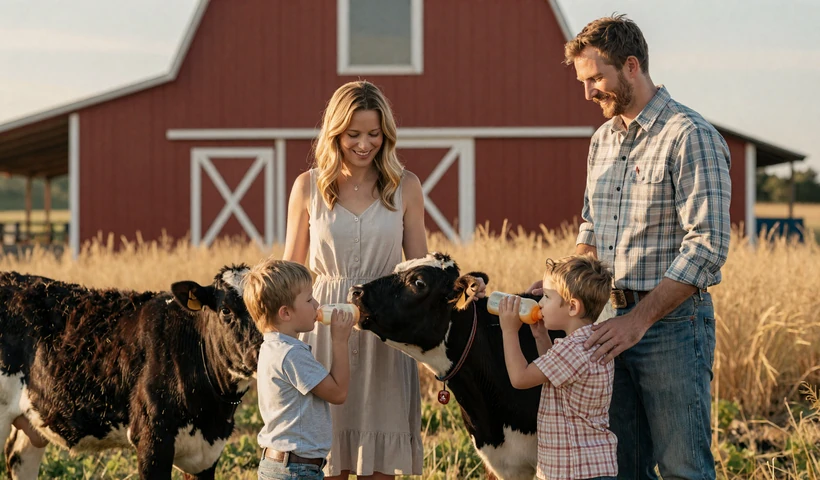
Children raised on a farm grow up inside the work. By age four most can name every breed in the barn; by six they've helped at calving and gathered eggs solo; by ten they've driven a tractor in low gear with a parent riding along. That early exposure to responsibility, animal care, and the consequences of skipped chores produces some of the most grounded young adults you'll ever meet.
For country couples, parenting is a team sport in a way it can't quite be in town. The kids see Mom and Dad working together every single day, and they grow up assuming partnership is the default. They learn that food doesn't come from a store, that weather has moods, that animals depend on you, and that family meals are the center of gravity. Many of the success stories on our Success Stories page include couples who specifically wanted this kind of upbringing for their kids and found a partner on MuchDating who shared that vision down to the bone.
The 4-H factor: 4-H, FFA, county fairs, and small rural schools knit farm kids into a community that can feel as close as family. Country couples often choose a farm partner specifically because they want to raise children inside that web - and they meet partners who feel the same on niche-aware platforms rather than mainstream apps.
Multigenerational Legacy and the Long View
Most farms aren't owned in the conventional sense - they're stewarded. The land your partner walks every morning was probably walked by their grandfather, and the operation you're being introduced to is often three or four generations deep. That changes the shape of a relationship in ways outside folks rarely see at first.
Country couples don't think in five-year plans. They think in 30 and 50-year arcs. Decisions about which barn to rebuild, which fields to enroll in conservation programs, and how to structure the eventual farm transition all touch the relationship. The most thoughtful platforms in the niche dating world - including the communities you'll find on the MuchDating niche hub - now include profile prompts about multigenerational living, succession planning, and raising children on shared land. Those aren't hypothetical questions. They're the everyday material of a real farm marriage.
Long-view conversations every farm couple eventually has
- Who inherits the operation, and on what timeline?
- How do we treat siblings or kids who don't farm?
- Where does the older generation live when they step back?
- How do we balance growth (more acres, more cattle) against debt and risk?
- What happens to the land if we don't have children - or if our children don't want to farm?
These conversations aren't morbid. They're love letters written in spreadsheets. A couple who can sit at the kitchen table and talk through succession with honesty and grace is a couple who's already proved they can survive almost anything together.
Real Country Couples Tell It Plain
The folks below are composites drawn from MuchDating member stories - different states, different ages, same lived truth. If you want to read the full versions, head over to the Success Stories page.
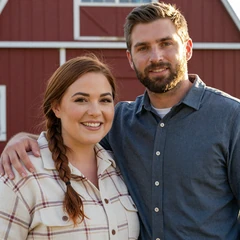
Farm life isn't romantic the way movies show it. It's romantic because you're building the same thing every single day, and you wake up and choose each other again before the coffee's even done brewing.
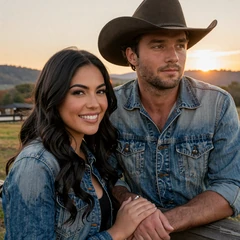
I came from town. He came from four generations on the same hill. The first calving season nearly broke me. The second one taught me I'd found my home. Ten years later I can't imagine waking up anywhere else.
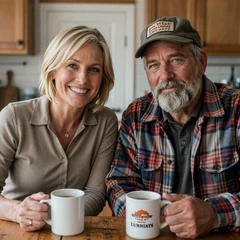
We make every big decision at the kitchen table with two cups of coffee and the checkbook. The marriage runs the farm - not the other way around. That's the rule that's kept us right.